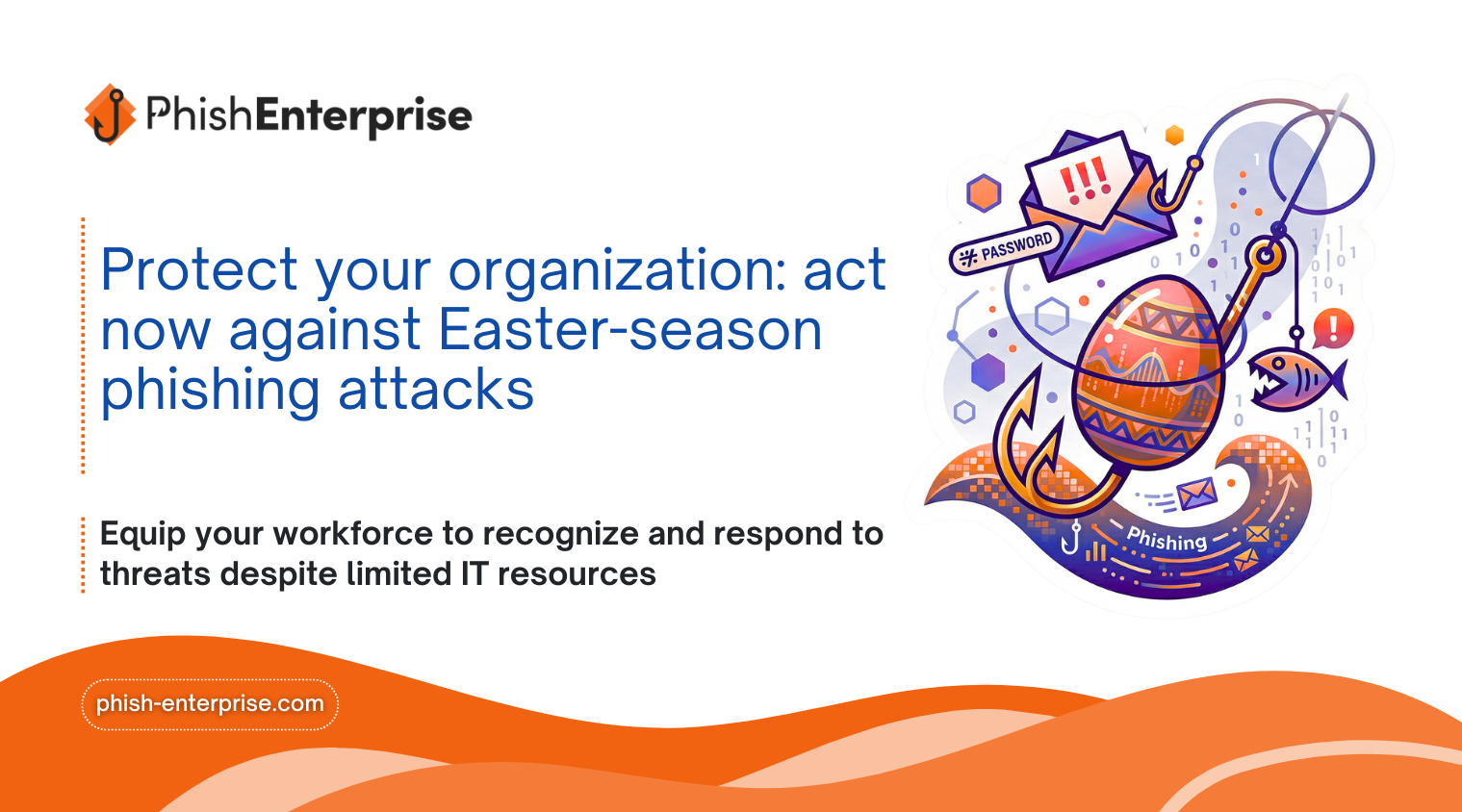
Across Europe, holiday periods like Easter consistently bring a rise in phishing activity. Cybercriminals take advantage of predictable patterns: reduced staffing, slower response times, and distracted employees.
According to the European Union Agency for Cybersecurity, phishing remains one of the most common initial attack vectors in cyber incidents, often exploiting human behavior rather than technical vulnerabilities.
During Easter, organizations face a dangerous imbalance:
- Increased phishing attempts
- Reduced IT and security coverage
- Higher likelihood of human error
This combination creates ideal conditions for successful attacks.
When IT is offline, employees become your first line of defense
 During holiday periods, employees are more likely to handle suspicious emails without immediate support from IT or security teams.
Simple decisions – such as whether to open an attachment or click a link – can have serious consequences when validation is delayed.
Phishing emails during Easter often mimic real business activity:
- Urgent supplier or invoice requests before holiday closures
- Delivery notifications linked to increased online shopping
- Internal emails impersonating HR, payroll, or leadership
These attacks are designed to look legitimate and exploit urgency – targeting employees directly.
Staffing gaps during holidays are unavoidable – but their impact can be reduced.
Instead of relying solely on IT teams to detect and respond to threats, organizations should empower employees to:
- Recognize phishing attempts
- Avoid risky interactions
- Report suspicious emails quickly
Solutions like Phish Enterprise help organizations operationalize this approach.
By combining phishing simulations, targeted training, and behavioral analytics, businesses can strengthen their human layer of defense – especially during high-risk periods like Easter.
Prepare people, not just systems
Cybercriminals exploit timing, distraction, and human behavior – factors that intensify during holidays across Europe.
If your security strategy depends entirely on full IT availability, you may be leaving a critical gap.
Preparing employees in advance ensures your organization remains resilient, even when resources are limited.
Final thought
Before the next Easter holiday period, consider:
Are your employees equipped to recognize and respond to phishing attempts without immediate support?
If not, strengthening your human defenses may be the most effective step you can take.
Strengthen your human firewall before the upcoming holiday
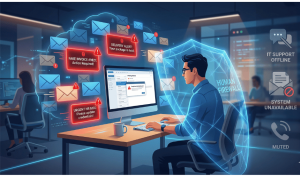 Don’t let one click become your first or next incident! Phishing attacks don’t slow down during holidays but your defenses do.
While your IT team is understaffed, attackers are actively targeting your employees with increasingly convincing emails. It only takes one mistake to trigger a breach, financial loss, or operational disruption.
With Phish Enterprise, you can identify your organization’s weakest points before attackers do:
- Simulate real phishing attacks across your workforce
- Expose high-risk users and departments instantly
- Train employees to recognize and stop threats in real time
- Track measurable improvements in security behavior
The question isn’t if your employees will be targeted – it’s whether they’re prepared.